 VITRUVEX
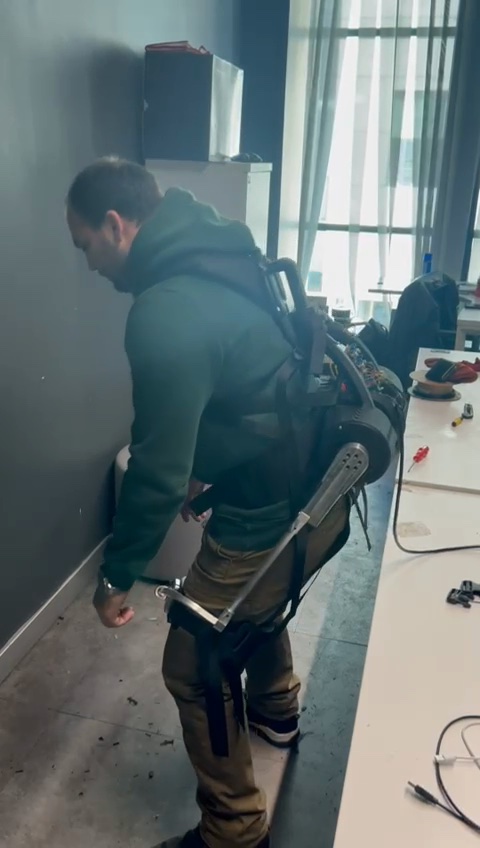
Does an Exoskeleton Fit Every Worker? Assessing Fit and Movement
A stated size range is not enough. Assess exoskeleton fit using actual workwear, PPE, movement transitions and the pressures of the job.
This article is an evidence-led technical and strategic analysis, not a product performance claim, medical advice or investment recommendation. Sources are listed below; deployment decisions still require task-specific validation.
The short answer: being within the size range is not enough
No. Meeting an exoskeleton’s stated height or size range does not establish suitability for every movement or task. An adjustment that feels comfortable standing still can feel different when bending, turning or walking. Assess the person, the job and other equipment together—not simply whether the device can be put on.
NIOSH’s discussion of user diversity explains why static fit checks alone are insufficient. Body-shape differences and fit during movement need attention.
Use the clothing and equipment worn on the job
List the actual workwear, footwear and required personal protective equipment (PPE) in the assessment plan. Do not assume an adjustment made over a thin T-shirt remains suitable with heavier clothing. Record contact with belts, pocket-mounted scanners or other equipment. Include whether gloves affect access to buckles and adjustments.
Removing required PPE is not a fit solution. Check manufacturer instructions and equipment compatibility with the people responsible for workplace safety. If compatibility cannot be demonstrated, mark that combination for reassessment.
Assess transitions, not one pose
Break the task into movements: approach, bend, grasp, straighten, turn and move away. Assess only relevant movements within manufacturer limits and an approved trial plan. Do not omit walking or sitting between tasks simply because they are not the main operation; these transitions also determine practical usability.
INRS’s selection guide focuses on the interaction between person, task and exoskeleton. The following proposed record turns that perspective into practical questions for an application discussion.
What should a user observation record contain?
Use the same headings for each participant. Instead of one satisfaction score, identify which movement and setting caused difficulty. A participant code helps track observations without collecting unnecessary identifying information.
- Clothing and PPE: The actual combination and possible contact points.
- Adjustment: Settings, time to put on and adjust, and assistance needed.
- Movement: Restricted motion, slipping, pressure or equipment snagging at each transition.
- Workflow: Between-task movements, breaks, removal needs and repeated adjustments.
- User feedback: Situations they do not wish to continue, with reasons in their words.
- Follow-up: The issue, responsible person and conditions for reassessment.
Consider work pressure when deciding suitability
A worker under deadline pressure may delay reporting discomfort. Do not turn the trial into a performance test. Explain feedback and stopping arrangements beforehand; discomfort is not an obstacle to overcome for approval. Record a task-specific decision: suitable, reassess after adjustment, or unsuitable, with reasons.
INRS’s integration guide connects the assistance need with evaluation in real working conditions. Explore the V-UP engineering prototype in that context and use the back-support exoskeleton selection criteria to frame your application discussion. An adjustable design does not prove a fit for every user.
Primary references
Sources and further reading
Related guides
Read next
 How Much Support Can an Exoskeleton Provide? Understanding Capacity Claims
How Much Support Can an Exoskeleton Provide? Understanding Capacity Claims
 what is an exoskeleton
What Is an Exoskeleton? A Technical Guide to Industrial Wearable Robotics
 active vs passive exoskeleton