
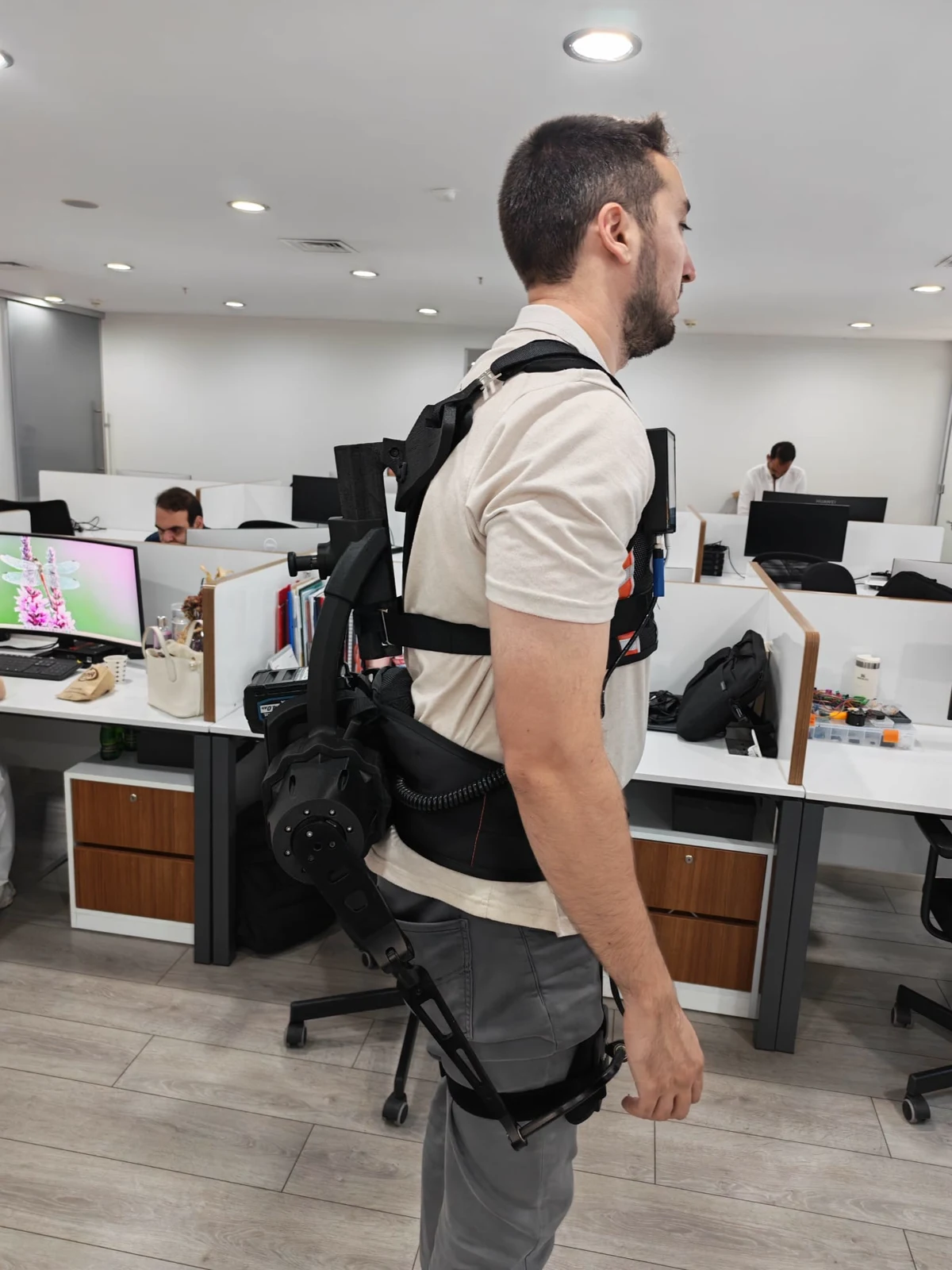
 Actual V-UP prototype · September–October 2026
THE MOVEMENT BEHIND THE WORK
Designed around repetitive bending and lifting.
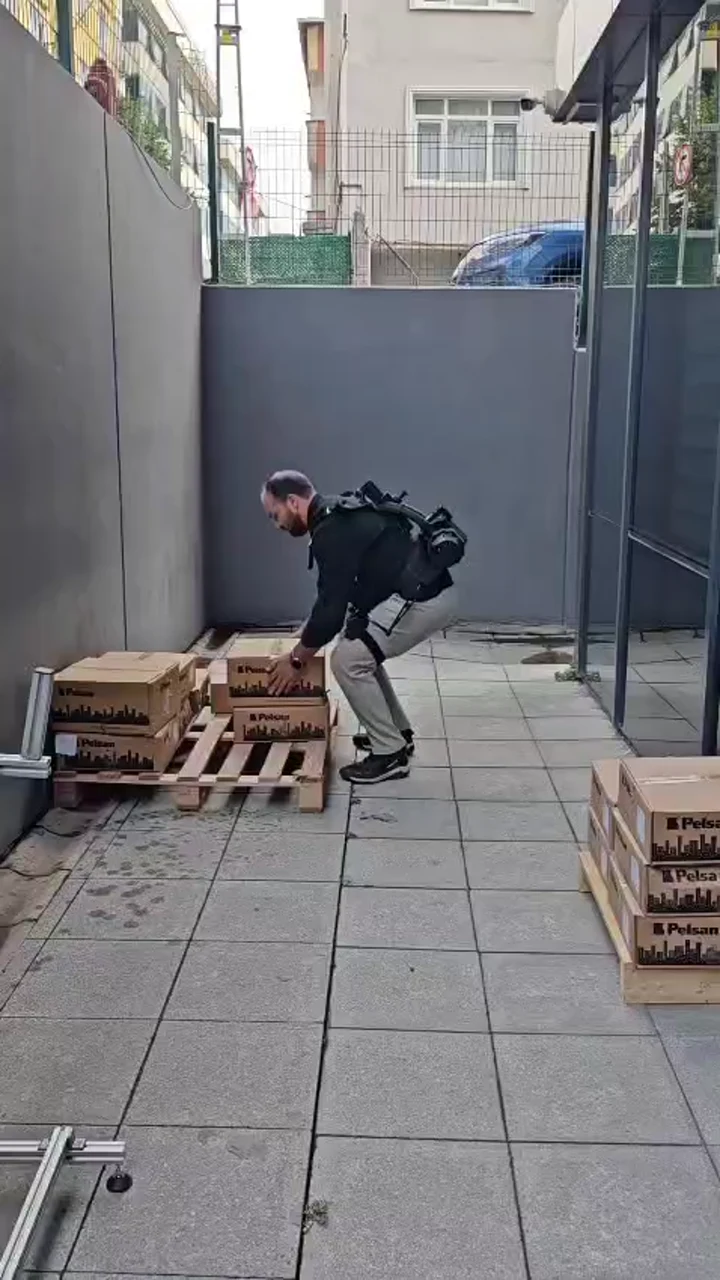
V-UP is being developed to support people during repetitive bending and lifting. The rhythm of the task, contact with the body and movement itself shape the design.
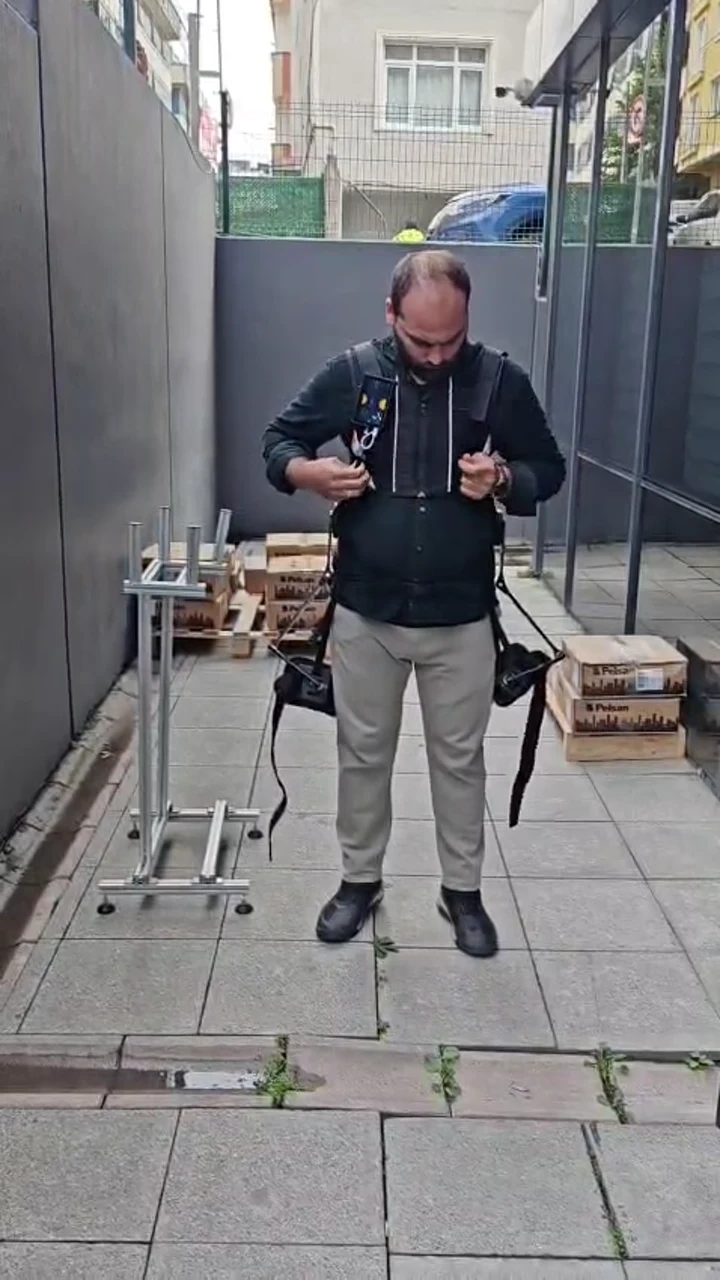
Actual V-UP prototype photograph and frames from prototype testing. September–October 2026.
01 / WEARER FIT
Start with the right fit.
- 01
Back and waist
Frame length and the waist belt are adjusted to the wearer.
- 02
Thigh interfaces
Connections above the knee provide the interface between the system and the body.
- 03
Task review
Fit and compatibility with movement are reviewed with the team during the initial evaluation.
Donning and adjustment are demonstrated for the selected prototype configuration.
02 / PRINCIPLE OF MOVEMENT
Mechanics and control, together.
The waist-level motor assembly works with connecting arms and thigh interfaces. Left and right drive are developed alongside motor feedback, control electronics and the user interface.
Explore the engineering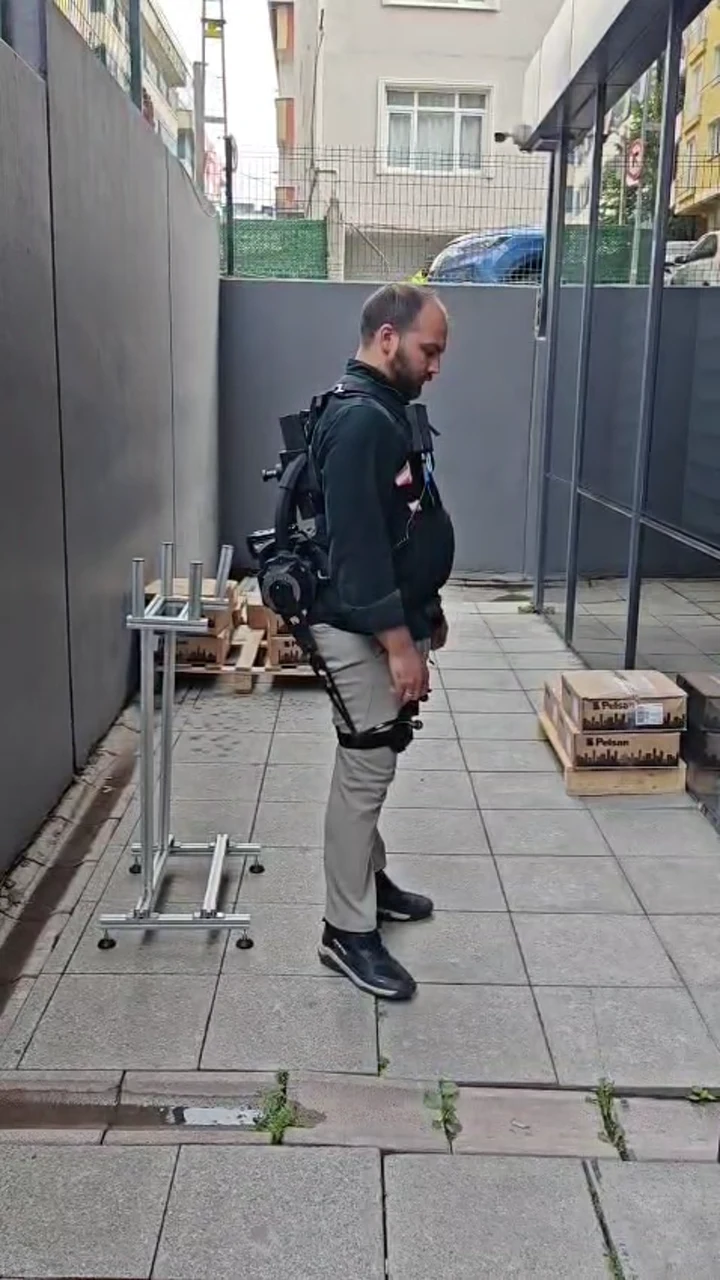
03 / TECHNICAL OVERVIEW
An engineering prototype.
Product and field validation are ongoing. Suitability and assistance level are evaluated for the selected task and configuration.
Technical discussion- Drive
- Dual-motor architecture
- Body interfaces
- Back, waist and above-knee thigh
- Fit
- Adjustable back length and textile fittings
- Development
- Technical validation and conformity work
Current technical scope
Weight, operating time, battery configuration and assistance level are discussed for the current product configuration.
V-UP does not replace personal protective equipment or justify higher lifting limits.
04 / Gallery
V-UP in actual prototype tests.
See the fit, adjustment and material-handling trials of the prototype.
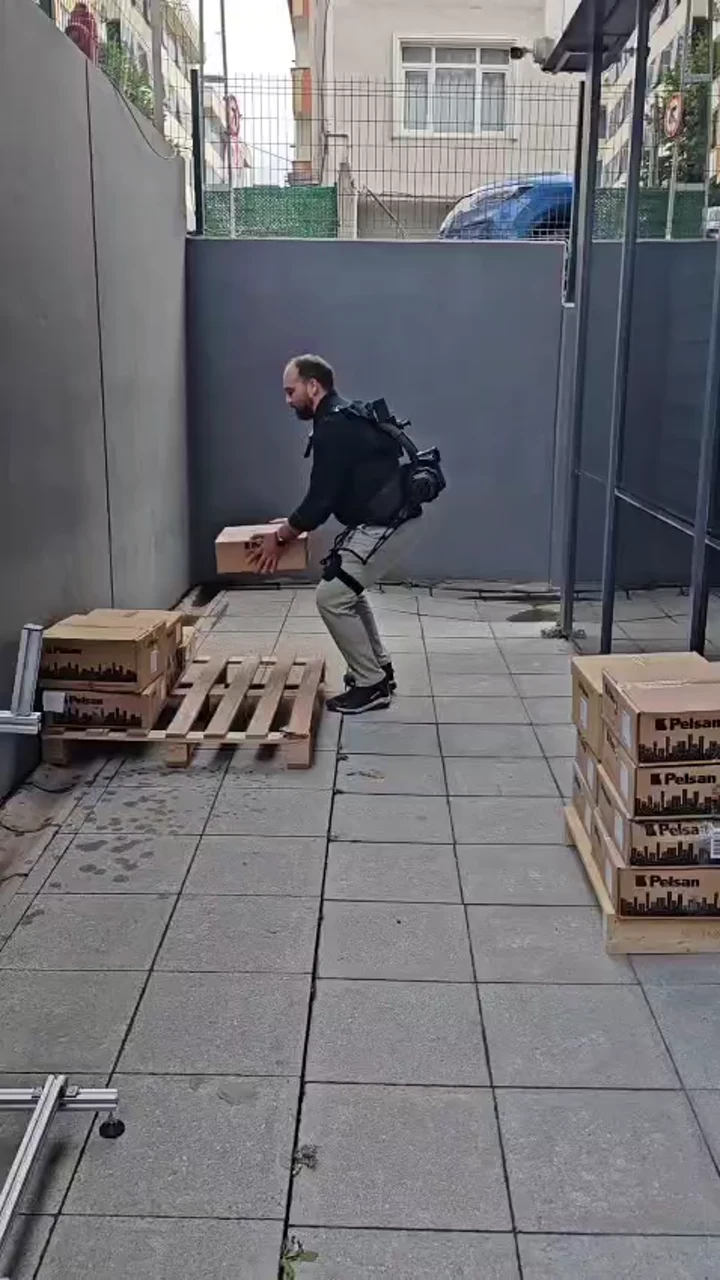
Actual V-UP prototype photograph and frames from prototype testing. September–October 2026.
Let’s assess V-UP for your task.
Tell us about your task, workspace and wearer needs. Together, we can define an appropriate demonstration or pilot evaluation.
Discuss a demonstration